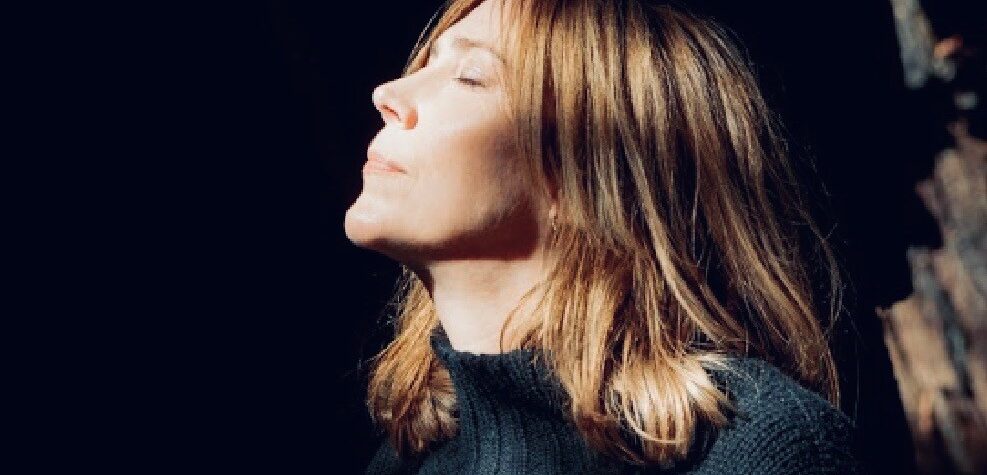
Beth Orton
Bio
For Beth Orton, growing up as an artist was never going to be seamless.
Watching Sleepless in Seattle recently, she found herself missing When Harry Met Sally. Tom Hanks was no Billy Crystal, and Meg Ryan was almost — but not quite — Sally. Half-jokingly, she reflected on how being cherished for a particular version of someone can lock them in that moment. “We hold on to the version of someone we first fell for and it feels wrong when they evolve somehow.”
The early version of Orton became something of a cultural touchstone. Her music soundtracked dawns and comedowns, fragility and tenderness, arriving at a moment when a generation, many for the first time, were learning how to feel. “My music was there for people as the sun came up and they came down,” Orton muses. “I was the soundtrack to a vulnerability that belonged to a particular time.” She understands how seductive it can be for an artist to want to remain preserved there. “I was the comedown queen,” Orton says. “And I was meant to stay forever held in that time.”
But staying was never an option. “For one thing I couldn’t be that girl and bring up children, to love them as they need to be loved,” she says. “For another, I couldn’t stay as I was and stay alive. The changes I had to make to live consciously transformed me.”
Growing up meant carrying one foot in an earlier self, out of loyalty to the people who loved her then, while continuing forward anyway, accepting the bumps, the losses, and the shedding of skins and ways of being that no longer served her. That process would eventually become unavoidable — not just emotionally, but physically.
On her birthday in December 2023, playing a show in Paris, Orton spoke aloud about having carried grief for much of her life, bracing for it to intensify with time. Immediately, rather, she felt an unexpected liberation. The weight she had long anticipated did not arrive and a long inherited fear fell away. There was no roadmap anymore, only the freedom to become herself on her own terms.
That freedom has been hard-won. In her 40s, Orton moved through a period of fractured memory and perception, leaving her exhausted and disoriented for a time. “Writing at the piano became a crucial anchor, a way to hold and store memories, each verse a small library of experience.” Being at the piano grounded her. Learning to engineer and eventually getting involved in her own production, she slowly reconfigured herself, reconnecting creative pathways and deepening her sense of purpose. The writing and production of Weather Alive and now her astounding ninth album The Ground Above became inseparable from that process of renewal and artistic definition.
For more than 30 years, Beth Orton has been our antenna to the cosmos, the poet laureate of forces too vast to take in all at once. Her records arrive patiently, unified by emotional focus rather than any single musical style. From the pioneering folktronica of 1996’s Trailer Park to the earthy classic-rock miniatures of 2006’s Comfort of Strangers through 2022’s self-produced Weather Alive, she has built a catalog that exists proudly out of time, each album its own planet in an ever-expanding solar system.
If Weather Alive lived underwater, suspended, spectral, and dreamlike, The Ground Above marks a resurfacing. It is her most direct and unapologetic music to date; profoundly urgent, embodied, and powered by a strength she did not know she possessed. Where the previous record unfolded in a post-ictal, time-out-of-time dreamscape, The Ground Above finds Orton firmly back on land, taking a giant intake of air. It documents survival, integration, and renewal without denial, acceptance without resignation.
“All the songs on the record are looking through the prism of the years from many directions at once,” Orton says. “If writing songs is therapy, it’s hallucinogenic therapy. It’s working with the unconscious.” The album represents independence and authorship, while being deeply collaborative at its core. Working with trusted musicians including multi-instrumentalists Shahzad Ismaily and Vernon Spring’s Sam Beste, drummers Tom Skinner (Sons of Kemet, The Smile) and Chris Vatalaro, and bassist Tom Herbert, Orton reaches new heights as a producer, songwriter, singer, and bandleader, guided by emotional truth rather than perfection. Their instinctive, meaning-led playing elevates the music and allows its vulnerability to remain intact.
Split into two distinct halves, The Ground Above offers a life-affirming reckoning with grief and love as parallel certainties. “Grief and love feel equally invincible to me, both capable of keeping you alive, both capable of bringing you to the edge,” Orton says of the title track. “This song lives in that tension, where surrender becomes strength.” The opening tracks arrive as direct transmissions from the subconscious, raw, searching, volatile, while the latter half settles into some of Orton’s most timeless melodies, evoking Great American Songbook forms refracted through spiritual jazz and improvisation. Each song unfolds as a suite of moments, rooted in lived experience rather than nostalgia.
Each of the songs carry core memories. On “Before I Knew,” Orton reflects on agency, asking how much choice any of us truly have. “Looking back, I can see how much of my life was shaped by choices made out of necessity, by survival, long before I understood I had any agency at all.” The song was recorded largely live, its gentle landing belying the weight of its reckoning. On “Cigarette Curls,” Orton draws from a formative early friendship. “She had bleached blonde curls, and smoked and spoke French. She introduced me to Franchise Hardy and The Slits. We danced ecstatically to Blondie, singing along at the top of our voices for hours. She was the best fun I’d met in human form; she lit up my world and she broke my heart. The joy, the freedom, the heartbreak, all of it arrived at once.” By the song’s close, she conjures a live hip-hop beat from her collaborators, layered with Nick Hakim’s wordless harmonies, capturing both reckless abandon and sudden rupture.
Throughout the album, Orton navigates aging, motherhood, ambiguous grief, political unease, and the ongoing choice to stay — in love, in art, and in the world. “Waiting,” one of the record’s most classically beautiful songs, began as a quiet rebuke to toxic positivity. “This song touches on stepping out of the holding pattern fear keeps us in, with a little poke at toxic positivity here and there,” Orton explains. “Realizing there is no future moment coming to save us from living now.”
The album’s later songs turn even deeper toward acceptance and endurance. On “Celestial Light,” Orton reflects on mortality and the quiet awe of being alive. “I think about death often, not always morbidly, more so as a way of stripping life back to its essential nature,” she says. “Looking for peace found in solitude.”
“I’ll Miss You” hovers at the edge of rupture. It isn’t quite a breakup song, but it stands on the brink bracing itself for loss. The song lies in a suspended moment of reckoning, where love is no longer enough if it requires self-abandonment. It is a quiet declaration; “Unless I can love you and remain whole, I must return to my own heart and walk away from yours.”
The world is already crowded with impassioned breakup anthems. “Love You Right” instead, chooses a different defiance. It’s a song of choosing love again and again in a world that makes it incredibly hard to do so.”
As the world crashed ever deeper into political chaos during the making of the record, that urgency seeped into the music. The Ground Above does not offer solutions, but it insists on presence. It holds a belief in art as a personal revolution, one that asserts humanity, feeling, and connection when truth feels increasingly weightless.
Orton’s voice, long capable of speaking as much through silence as through sound, stretches even further here, moving from whispered incantation to primal howl. On “Otherside,” her singing takes on the very shape of the song’s emotion — a direct transmission of experience.
What began as a deeply personal inquiry into what might exist on the other side of herself if she stepped out of her own way, gradually expanded outward. She came to understand that the real barrier was, more often than not, internal, the limiting beliefs she had unknowingly held herself captive to.
She likens it to the first song of the morning birds, a declaration of survival. “The birds are letting each other know they made it through the night,” she says, “Telling each other, ‘I’m still here.’” In that way, the song becomes both a witness and a message, an insistence that life, however raw or fleeting, persists.
As with Weather Alive, Orton self-produced the album to foreground the collective spirit of the room, supported by collaborators whose emotional intelligence and generosity run through every note. Where the previous record felt like a ghostly conjuring, The Ground Above reaches outward, to connect, to insist on presence, to hold eye contact. It is about standing in earned strength, honoring what was, and building new ground beneath your feet as you step out into worlds where there is no ground to depend upon.
music
Photos
Video
download
Contact
- Share



artist